Another element of legal uncertainty emerges in San Luis Potosí. The latest controversy in the state governed by Ricardo Gallardo of the PVEM party is not only about his attempt to install his wife as his successor, a topic for another discussion, but also about the revival of a state-run water park, shrouded in opacity and mystery over its brand management.
In the middle of Holy Week, Gallardo Cardona inaugurated the Dinoasis Aqua Park in the emblematic Tangamanga 1 park in the state capital. This is essentially a renovation of the old Splash park, opened in the 1990s, which later fell into decay and remained closed for many years. The current administration initiated the project to bring it back to life.
Unfortunately, the reality is that to this day, thousands of accounts have been frozen and remain in that state, without any formal complaint or subsequent seizure. These freezes are a consequence of mere suspicion, without any right to defense, let alone the release of funds. With this new resolution, specialists in the field believe it could allow this to happen indiscriminately, as it is currently subjective for the UIF (Financial Intelligence Unit), but there is no list of acts or circumstances that permit it. Far from having mechanisms for defense, citizens could be left in limbo for many years, which, according to companies that have experienced this, meant economic ruin, even though they are told they can go to the UIF's offices to provide clarifications if their account was frozen on suspicion of money laundering.
This also brings forward the implementation of Basel II and III, which allowed the banking sector to grant those extra months of non-payment to its clients during the pandemic; it also created the Financial System Stability Committee so that authorities could make decisions and analyze risks, and of course, on Anti-Money Laundering (AML) issues, lists of Politically Exposed Persons (PEPs) were created, and progress was made in implementing the recommendations of the Financial Action Task Force (FATF).
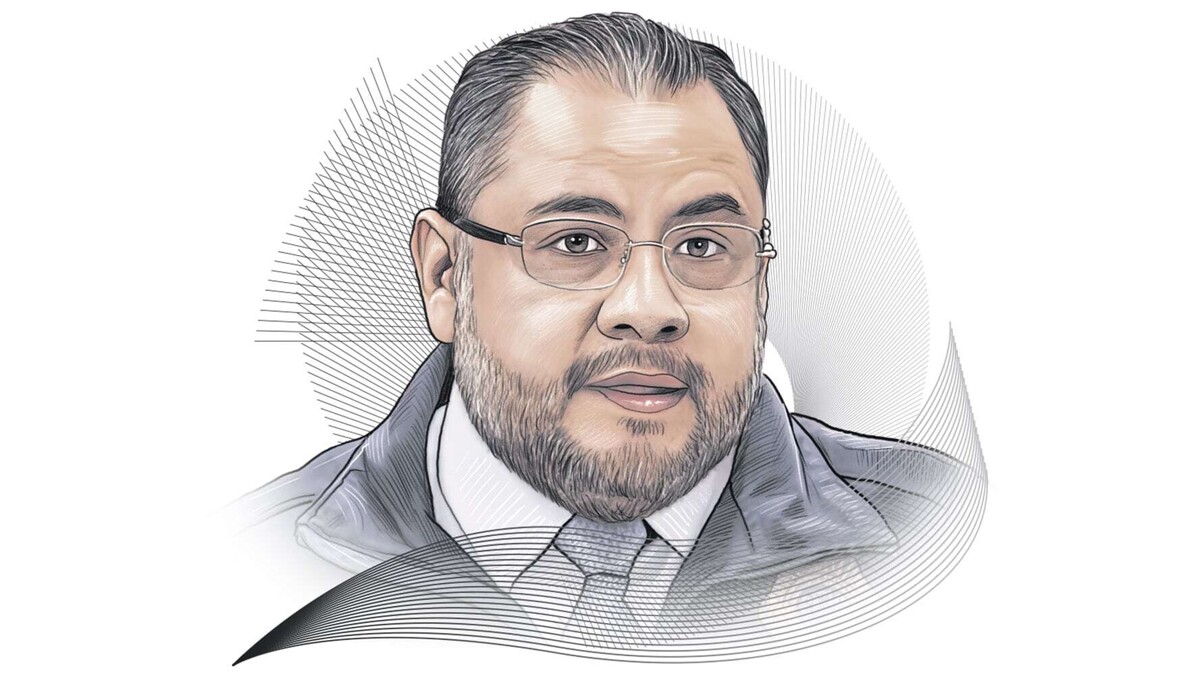
With the change this week by the Supreme Court of Justice of the Nation, allowing the UIF, led by Omar Reyes Colmenares, to block bank accounts without a court order, alarms are ringing regarding legal certainty. While the head of the UIF has come out to the media to remind everyone that it is a preventive authority whose purpose is to stop illicit funds from entering the economy and to prevent the financial system from being used to harm the country's finances, and that they do not have access to Mexicans' financial information, the truth is that the court's resolution gives them new power.
It must be remembered that the Court removed two important safeguards the UIF had when it wanted to freeze accounts, under articles 115 and 116 of the Credit Institutions Law, and this is what worries lawyers. The account freezing was implemented during the years when Alberto Bazbaz headed the UIF and sought to have a tool to block or freeze accounts administratively. At that time, this incorporation was in line with the FATF's own recommendations, which state that countries must have effective tools to prevent funds that may be laundered or come from such a crime from continuing to circulate in the financial system and, in some way, contaminating it.
But be careful, back then, the then-SCJN placed two important brakes on that power, knowing that without them it could become an all-powerful and uncontrolled entity. One brake was that it could only be used in response to clear international commitments and, therefore, explicit requests, meaning it was a tool that could not be used on vague suspicions or accusations without complaints, but rather through international cooperation mechanisms. The second brake the Court applied was to give the citizen a procedural shield, as it allowed a judge, in an amparo lawsuit, to even order a provisional unfreezing to allow the use of funds for subsistence, pension payments, or medical treatments.
When the UIF has data on a potential money laundering crime, it does have the authority to immobilize the funds, but it must immediately file the corresponding complaint and have the Public Ministry order the seizure through a control judge. This change could be a ruling with enormous reach and repercussions, without a trial that allows for an accusation, proof, and due defense.
The amount of the investment, the way the contract was awarded, and which company received it are unknown. Furthermore, the environmental organization Cambio de Ruta questioned the environmental impact of the project due to the number of trees affected and the recreational use of water in a city with serious water supply difficulties. They also discovered that the trademark for the park is being registered at the Mexican Institute of Industrial Property (IMPI)... but not by the state government, but by a private individual from Pátzcuaro, Michoacán, who has the same name for a water park attraction business, whose location is not specified.
Curiously, the graphic image registered with the IMPI is exactly the same as the one used by the newly inaugurated park, so the coincidence has raised suspicions about the nature of the state project, in the sense of whether its use will benefit private individuals. The lack of official information is another ingredient that increases doubts.
As a curious fact, the promoter of the application has the same last name as the founder of a Michoacan construction company that received a multi-million-dollar contract for public works in 2024 from the municipal government of Soledad de Graciano Sánchez, which is part of the metropolitan area and is the cradle and bastion of the political movement led by Gallardo Cardona.
The 'Dark Side' of the AICM
Beyond the renovations being carried out at Terminals 1 and 2 of the Mexico City International Airport, and which seem difficult—at least at Terminal 1—to finish on time, and the prohibition of ride-hailing apps from picking up passengers, there is also the challenge of improving not only security but also service and attention. The airport, led by Admiral Juan José Padilla Olmos, will be the face for millions of tourists, and if they treat people as they are during Holy Week, they will surely earn a reputation for their poor treatment, even towards ICE agents.
And besides the airport being under construction, with not all restrooms available, all flights arriving during Holy Week, without exception, are forced to undergo a double X-ray check, even if they only have a small piece of luggage. The criticism is not about the double check; it must be remembered that when bags pass through the airport's internal areas to get to the baggage claim, they already go through Customs detectors. Even Customs officials, from the same government, have already spoken about the unnecessary actions of the Navy, which is in charge.
This is because they create a bottleneck at the baggage claim by forcing everyone to pass through their only two X-ray machines to exit. And if someone asks if they can go through the 'nothing to declare' line, which they practically no longer allow anyone to use, they simply deny it in a rude manner and without real justification. Although it is about having a secure airport, this should not come at the expense of basic manners, which they seem to have left at home. They will be the first face visitors see at the World Cup.
Gas Station Closures
In Mexico, there is the National Registry of Gasoline and Liquefied Petroleum Gas Installations (RENAGAS), created during the administration of Armando Ocampo, which registered an adherence of over 90 percent. It established one of its main benefits as preventing the immediate closure of installations in the process of regularization, except in cases of imminent risk to safety or the environment. But times change, and now closures are the order of the day, even for those in the process.
And the Agency for Security, Energy, and the Environment, led by the newly appointed Andrea González Hernández, has increased verification visits and closures at service stations and gas points in recent weeks, even though the RENAGAS regularization program envisioned incentives to facilitate the sector's regularization. Complaints are now commonplace.
The main complaint, besides the closures, is that the delays in the resolution of permits and procedures by the authority itself prevent the regularization processes from being completed, which has created a vicious circle. On top of the increase in gas and gasoline prices, add the closures, and with that, the supply is reduced.
For now, the outcome is up in the air. Something that should happen in less than a week to be decisive and to effectively have all the data in hand to act through that channel.
In addition to the standard water attractions, it was given a 'Jurassic' theme with animatronic dinosaurs, which gave rise to its name. But as we already know, transparency is not the strong suit of the Gallardo administration, and it has kept most of the contracts for its works hidden. The water park is no exception. Mexico has made significant progress in adopting various international regulations to strengthen the financial system.